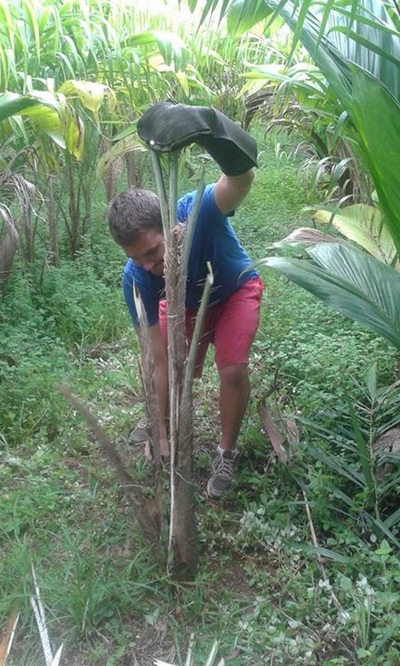
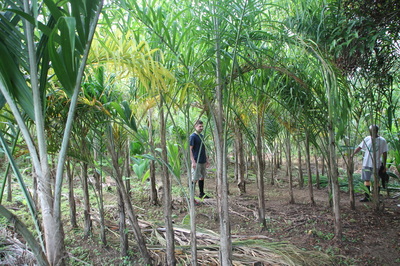
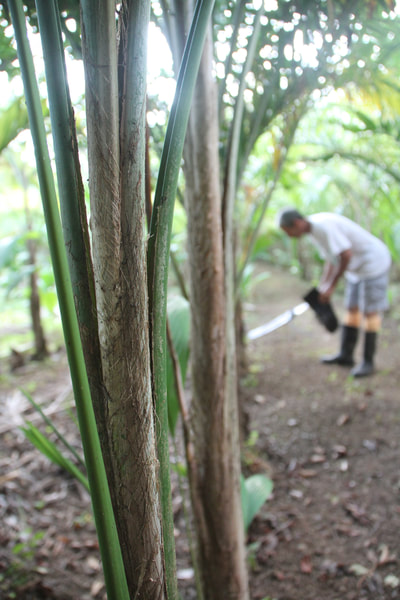
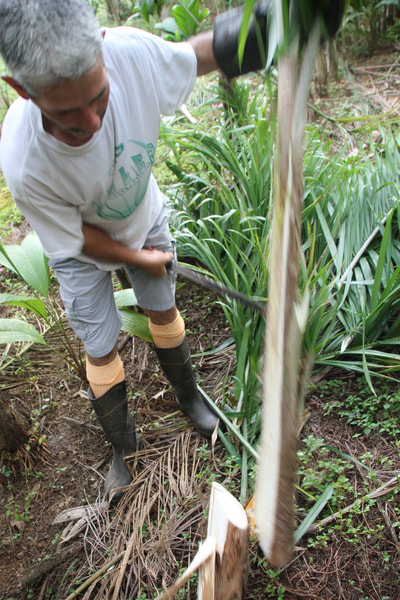
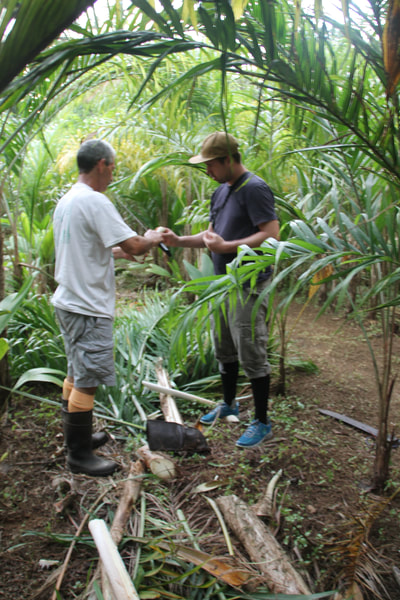
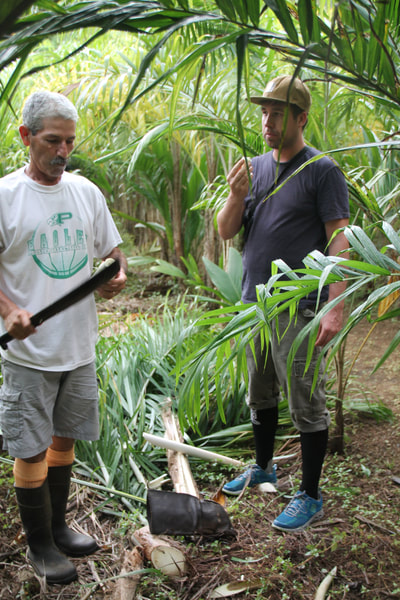
In 2012, the University of Stanford EU began an economic investigation in the southern area of Costa Rica, in Osa and Golfito, to learn about the local socioeconomic situation marked by stages of banana companies, forestry companies and others that offered work and then left a fragile economy in the area. This gave way to the Palmatica company for the production of vegetable oil palm and a processing plant was built in Laurel de Paso Canoas, Costa Rica's southern border. Expectations grew and many people sold or rented their properties for planting palm. From the corridor of Corredores to Osa, it started to become a monoculture where people put their hope of development due to the market price, even though secondary forests were being cut, wetlands drained and natural habitats diminishing. That's when the need arose to stop and start taking into account the recommendations of universities about finding other sustainable development alternatives. Stanford University started looking for small producers to carry out an investigation with palm cultivation, and selected Rancho Verde de Osa as a model in a 12 m² area to introduce grafted cocoa resistant to different diseases, banana, laurel trees for reforested wood, and in another area only palm, to do a production analysis per plot. Among the results found was the great visitation of species that contribute to human well-being in the areas with crop diversity, but not in the palm-only sector, which is a great educational opportunity apart from selling products and offering the sustainability experience in relatively small areas.
Duration: 1.5 to 2 hours
Tour given in Spanish. A translator can be hired at an additional cost.
For Reservations or More Information:
Jessica Roldan (506) 8667-2535
[email protected]
Our History
Don Enrique Ureña was the first child to arrive at Rancho Quemado, at that time his uncles were the founders of the town. He learned about agriculture and raising domestic animals since childhood, and he managed to be part of the Osa development process and his community, having the experience working with the Ston forestry company and then living the hard times of unemployment, then the boom in oil palm plantations and a bit of devastation from the forests that saw him grow. He formed his family with his wife Alice Cambronero and his 4 daughters, and they maintained the hope of a better future in the community, as part of the representative leadership of Rancho Quemado and also for their tourism initiative. Around 2013 they participated in the socio-economic research process Osa-Golfito (INOGO) of Stanford University, and it was an enriching experience, to broaden the general vision of the development of the region and to understand that it was necessary to make decisions and make changes for the welfare of all. Then the University, as part of their proposals in the area of production, required some land for experimental farms, and in Rancho Quemado they contacted Don Enrique to participate with one hectare of his property that was in pasture, and he accepted with the motivation to be part of this great initiative, which is so important for Osa, and which was part of his rural tourism enterprise and his commitment to protect the biodiversity that surrounds them.